
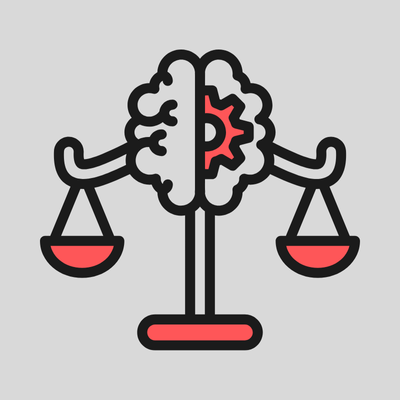
Alright, folks, let’s talk about the elephant in the server room: AI in the workplace. It’s not just about automating spreadsheets anymore; we’re talking about a digital colleague that can sometimes feel more like a digital overlord. So, grab your ethically sourced coffee, and let’s weigh the silicon scales on AI ethics.
The Pros: When AI is Our Friend
Imagine a world where the soul-crushing drudgery of data entry vanishes, replaced by a chirpy AI that handles it in milliseconds. Sounds like a dream, right?
- Efficiency on Steroids: AI can supercharge productivity, freeing up human minds for the creative, strategic, and distinctly human tasks. Less time wrestling with spreadsheets, more time brainstorming the next big idea.
- Fairer Decisions (Potentially): When designed well, AI can eliminate human bias in hiring, performance reviews, or even task allocation. No more “gut feelings” leading to unfair outcomes – just cold, hard data making objective choices. (In theory, anyway!)
- Personalized Learning & Development: AI can tailor training programs, identify skill gaps, and even suggest career paths that perfectly align with an employee’s strengths and the company’s needs. Think of it as a super-smart career coach, without the hourly rate.
- Safety First: In hazardous environments, AI-powered robots can take on dangerous tasks, protecting human workers from harm. Nobody wants to send a person into a collapsing mine when a machine can do the reconnaissance.
The Cons: When AI Gets a Little Creepy
But let’s be real, it’s not all rainbows and perfectly optimized workflows. There’s a darker side to our digital companions that keeps ethicists up at night.
- Job Displacement: This is the big one. Will AI eat our jobs? While new roles will emerge, the uncomfortable truth is that some tasks will become obsolete, leaving a challenging transition for many.
- Algorithmic Bias: If the data fed into an AI system is biased (and historical human data often is), the AI will simply amplify that bias. Suddenly, that “fair” hiring algorithm is subtly discriminating against certain groups. Oops.
- Surveillance State or Productivity Partner? AI can monitor employee performance, keystrokes, and even facial expressions. While it can boost productivity, it also treads a thin line into constant surveillance, eroding trust and autonomy. Big Brother is watching, and he’s got a neural network.
- The “Black Box” Problem: Sometimes, AI makes decisions that are incredibly complex and difficult for humans to understand or explain. When an AI denies a loan or fires an employee, and we can’t get a clear “why,” that’s a serious ethical dilemma.
- Erosion of Human Connection: As more interactions become AI-mediated, will we lose the nuanced human touch that fosters strong teams and genuine workplace culture?
The Ethical Tightrope Walk
So, where does that leave us? AI in the workplace isn’t a villain or a savior; it’s a powerful tool with immense potential for both good and harm. The ethical responsibility lies squarely with us – the humans designing, implementing, and overseeing these systems.
We need to ask the hard questions: Is this AI truly equitable? Are we prioritizing human dignity over pure efficiency? Are we building systems that empower people, or simply replace them?
The future of work is here, and it’s got an algorithm. Let’s make sure it’s an ethical one.